BoredFlix
HomeMoviesShowsMy List
TV Shows/Horizon/S53 E3
Horizon season 53 episode 3 still

Horizon: Season 53 Episode 3 — The Mystery of Dark Energy

★ 8.0·Aired March 30, 2016·60 min

Examining Dark Energy, the mysterious force that is unexpectedly causing the universe's expansion to speed up. Its effects were discovered in 1998, but physicists still do not know what it is, and its very existence calls into question Albert Einstein's General Theory of Relativity; the cornerstone of modern physics. The hunt for the identity of Dark Energy is on, and although experiments conducted on earth and in space generate data that might provide a clue, physics is hoping another Einstein might emerge and write a new theory that explains the mystery.

← Episode 2Episode 4 →All episodes

FAQ about Horizon S53E3

You can watch Horizon season 53 episode 3 "The Mystery of Dark Energy" online for free on BoredFlix, in HD with no account or registration required.
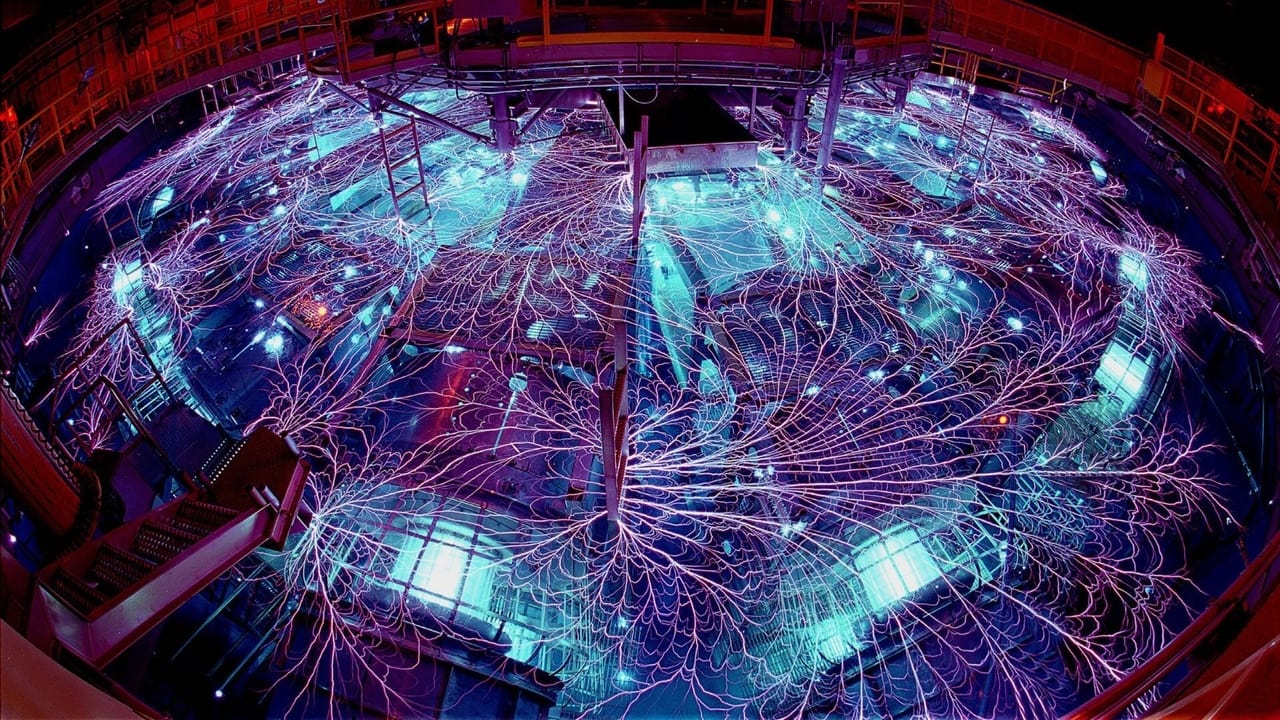

Examining Dark Energy, the mysterious force that is unexpectedly causing the universe's expansion to speed up. Its effects were discovered in 1998, but physicists still do not know what it is, and its very existence calls into question Albert Einstein's General Theory of Relativity; the cornerstone of modern physics. The hunt for the identity of Dark Energy is on, and although experiments conducted on earth and in space generate data that might provide a clue, physics is hoping another Einstein might emerge and write a new theory that explains the mystery.

Horizon season 53 episode 3 "The Mystery of Dark Energy" originally aired on March 30, 2016.

This episode runs for about 60 minutes.

Horizon season 53 episode 3 holds an average viewer rating of 8.0/10 on TMDB. You can watch it free on BoredFlix and judge for yourself.

Horizon

Horizon

Documentary

Play S53 E3
1964TV-PG 7.5

Horizon tells amazing science stories, unravels mysteries and reveals worlds you've never seen before.

Status
Returning Series
Language
English
First Aired
February 4, 1964
Last Aired
April 15, 2026
Seasons
62
Episodes
1174
BBC Two

E11h 0m

The Immortalist

Investigating the story of how a Russian internet millionaire, Dmitry Itskov, is turning to cutting edge science to try to unlock the secret of living forever. The programme investigates the real science inspiring his bold plan to upload the human mind to a computer, and examines whether his goal of bringing about immortality for humans within thirty years is attainable.

E21h 0m

Project Greenglow - The Quest for Gravity Control

Documentary exploring science's long-standing obsession with the idea of gravity control, including recent breakthroughs in the search for loopholes in conventional physics. The programme examines how the groundwork carried out by Project Greenglow in the mid-1990s by UK defence manufacturer BAE Systems (based on the work of Eugene Podkletnov[82]) has changed the understanding of the universe, making the dream of flying cars and journeys to the stars no longer quite so distant.

E31h 0m

The Mystery of Dark Energy

Examining Dark Energy, the mysterious force that is unexpectedly causing the universe's expansion to speed up. Its effects were discovered in 1998, but physicists still do not know what it is, and its very existence calls into question Albert Einstein's General Theory of Relativity; the cornerstone of modern physics. The hunt for the identity of Dark Energy is on, and although experiments conducted on earth and in space generate data that might provide a clue, physics is hoping another Einstein might emerge and write a new theory that explains the mystery.

E41h 0m

Oceans of the Solar System

The oceans define the earth. They are crucial to life and we used to think that they were unique to our blue planet. But we were wrong. It has recently been discovered that there are oceans all over our solar system and they are very similar to our own. And now scientists are going on an epic journey in search of new life in places that never seemed possible. Nasa is even planning to dive to the depths of a strange, distant ocean in a remarkable submarine. Horizon discovers that the hunt for oceans in space is marking the dawn of a new era in the search for alien life.

E51h 0m

The End of the Solar System

This is the story of how our solar system will be transformed by the aging sun before coming to a spectacular end in about eight billion years. Astronomers can peer into the far future to predict how it will happen by analysing distant galaxies, stars and even planets in their final moments. In this film, Horizon brings these predictions to life in a peaceful midwestern town that has a giant scale model of the solar system spread out all over the city. As it ages, the sun will bloat into a red giant star, swallowing planets... as well as half the town. The fate of the Earth itself hangs in the balance. How will the solar system end?

E61h 0m

Should We Close Our Zoos?

Liz Bonnin presents a controversial and provocative episode of Horizon, investigating how new scientific research is raising hard questions about zoos - the film explores how and why zoos keep animals, and whether they need to change to keep up with modern science or ultimately be consigned to history. Should zoos cull their animals to manage populations? Liz travels to Copenhagen Zoo, who killed a giraffe and fed it to the lions, to witness their culling process first hand. They think it is a natural part of zoo keeping that is often swept under the carpet. Should some animals never be kept in captivity? In a world exclusive, Liz visits SeaWorld in Florida and asks if captivity drove one of their orcas to kill his trainer. But could zoos be the answer to conserving endangered species? Liz examines their record, from helping breed pandas for the wild to efforts to save the rhinos. She meets one of the last surviving northern white rhinos and discovers the future of this species now lies in a multimillion-dollar programme to engineer them from stem cells. Veteran conservation scientist Dr Sarah Bexell tells Liz the science of captive breeding is giving humanity false hope.

E71h 0m

How to Find Love Online

Dr Xand Van Tulleken is single and looking for love. Mathematician Dr Hannah Fry wants to use him as her guinea pig to test whether the algorithms that dating sites use to match people actually work. While Hannah builds a dating site, Xand meets the scientists investigating online dating - and learns what pictures to use and what to write in his profile. He tries out a 'bot' that has automated a swiping app and has an MRI scan to find out whether his brain is equipped for love. 50 members of the public take part in some mini experiments at a date night - and Xand goes on various dates to test whether the algorithm is better than him choosing randomly.

E81h 0m

Ice Station Antarctica

Antarctica is the last great wilderness. It's the coldest, windiest, driest and most isolated place on Earth. And every winter, for over three months of the year, the sun never rises. But it's also home to the British Antarctic Survey's Halley Research Station. A veteran of living and working at Halley in the early eighties, BBC weatherman Peter Gibbs makes an emotional return to the place he once called home. A place that, during his time, was key to the discovery of the ozone hole. The journey starts with an arduous 12-day, 3000-mile voyage onboard the RRS Ernest Shackleton. Once on the ice shelf, Peter is delighted to finally arrive at the futuristic research station and marvels at the cutting edge science being done at Halley today. From vital discoveries about how our lives are vulnerable to the sun's activities, to studying interplanetary travel and the threat of man-made climate change. But Peter's journey is also something of a rescue mission. The research station's home is a floating ice shelf that constantly moves and cracks, and the ice shelf has developed a chasm that could cast Halley adrift on a massive iceberg.

E91h 0m

Curing Alzheimer's

Horizon investigates a new era of Alzheimer's research, which is bringing hope to millions of sufferers across the world. New scanning and gene technology is allowing scientists to identify the disease at its earliest stages, often 15 years before symptoms appear and the brain cells are destroyed. A series of new drugs trials in Colombia, the USA and Europe are showing startling success in reducing beta amyloid, the protein which is a hallmark of the disease. It is also becoming clear that changes in lifestyle can prevent the development of the disease. A new system inside the brain has been discovered which clears amyloid when we are in deep sleep, but allows it to accumulate if we don't sleep well. The programme reveals that for sufferers in the early stages of the disease, brain connections, or synapses, can be strengthened and even replaced by absorbing enough of the right nutrients. A UK-wide trail helps sufferers in the early stages to concentrate on improving everyday tasks, and in the process not only make their lives easier, but helps to reactivate the planning and organisational parts of the brain. In an aging world, where the biggest risk of developing Alzheimer's is old age, the scientific breakthroughs in Alzheimer's disease are bringing hope where once there was despair.

E101h 0m

E-Cigarettes: Miracle or Menace?

Michael Mosley investigates the dramatic rise in e-cigarettes. They're everywhere these days, but what does the latest scientific research on them reveal? Michael reveals what e-cigarettes are really doing to your health. Are they really better for you than cigarettes? What is actually in them? Is passive vapour harmful? And can they really stop you from smoking? Michael meets some of the scientists around the world studying them, asks a group of volunteers to try to give up smoking regular cigarettes using them, and even takes up 'vaping' himself, smoking an e-cigarette every day for a month to see the effects on his own health - no easy task for such a committed non-smoker.

E111h 0m

Why Are We Getting So Fat?

Over 62% of adults in the UK are currently overweight or obese and this figure is set to rise. A common attitude is that obese people should be ashamed - it is their fault, they have no will power and if they could just 'eat less and exercise more', the problem would soon be solved. Yet, despite millions of pounds being spent on this simple message, the UK is getting fatter every year. Cambridge geneticist Dr Giles Yeo believes that for many obese people, simply eating less is a lot harder than you might think - and he is taking a road trip around the UK and America to uncover why. He meets the real people behind some of the more shocking newspaper headlines and, through their stories, reveals surprising truths which dispel commonly held myths about obesity. He gains access to scientists and doctors trialling cutting-edge techniques to tackle the crisis - from a 'miracle' hormone injection to a transfusion of faecal matter, and even learns a thing or two about his own size and relationship with food.

E121h 0m

Sports Doping - Winning At Any Cost?

Dr Xand van Tulleken investigates the world of performance-enhancing drugs - from the athletes seeking the rewards of fame, glory and lucrative sponsorship deals to the hundreds of thousands of people in the UK now regularly taking anabolic steroids to look good and buff up. What are these drugs? What do they do to the body? And is it worth it? Xand's investigation reveals the extraordinary gamble dopers take with their health. Long-term effects include kidney failure, cognitive impairment and testicular shrinkage, and Xand witnesses how users are self-experimenting with drugs that have not yet been approved for human use. Horizon uncovers the new frontier of doping, from new molecules to gene therapy - where the genes that control muscle growth are altered. These new methods could be completely undetectable by the doping authorities. Finally, with the help of his twin brother Chris, Xand discovers the legal ways some athletes try to gain the edge.
E131h 0m

Inside CERN

With exclusive behind-the-scenes access, Horizon follows the highs and lows of an extraordinary story in particle physics. In June 2015, teams at CERN started running the large hadron collider at the highest energy ever. Rumours quickly emerged that they were on the brink of a huge discovery. A mysterious bump in some data suggested a first glimpse of a brand new particle that could change our understanding of how the universe works. A new particle could hint at extra dimensions and help us understand the very beginning of the universe - but first the team has to find it. Horizon follows the scientists as they hunt for the elusive signals that would prove if there is a new particle or if it is just noise from their machine.

E141h 0m

My Amazing Twin

The acerbically witty and severely facially disfigured broadcaster Adam Pearson presents a personal film about genetics. He and his twin brother Neil are genetically identical and both share the same genetic disease, Neurofibromatosis 1 (Nf1) - yet they are completely different. Adam's face is covered with growths, whereas Neil has none. Neil has short term memory loss, whereas Adam is razor sharp. How can the same genetic disease affect identical twins so differently? Adam is on the cusp of a successful film and television career, but the disease has left tumours on his face that are growing out of control and he could lose his sight. For years, everyone thought Adam's brother Neil had escaped symptoms, but today his life is governed by epilepsy and a mysterious memory loss that suddenly came on during his teens. Determined to save their future, Adam tries to find out why the disease affects the twins so differently and see if there is anything he can do to stop it from tearing their lives apart.

E151h 0m

The Lost Tribes of Humanity

Alice Roberts explores the latest discoveries in the study of human origins, revealing the transformation that has been brought about in this field by genetics.

E161h 0m

The Wildest Weather in the Universe

We love talking about the weather - is it too hot or too cold, too wet or too windy? It's a national obsession. Now scientists have started looking to the heavens and wondering what the weather might be like on other planets. Today, we are witnessing the birth of extra-terrestrial meteorology, as technology is allowing astronomers to study other planets like never before. They began with our solar system, sending spacecraft to explore its furthest reaches, and now the latest telescopes are enabling astronomers to study planets beyond our solar system. Our exploration of the universe is revealing alien worlds with weather stranger than anyone could ever have imagined - we've discovered gigantic storm systems that can encircle entire planets, supersonic winds, extreme temperatures and bizarre forms of rain. On some planets, the temperatures are so hot that the clouds and rain are believed to be made of liquid lava droplets, and on other planets it is thought to rain precious stones like diamonds and rubies. We thought we had extreme weather on Earth, but it turns out that it is nothing compared to what's out there. The search for the weirdest weather in the universe is only just beginning.

You Might Also Like

The World According to Jeff Goldblum

The World According to Jeff Goldblum

2019 6.6

How Do They Do It?

How Do They Do It?

2006 7.5

NOVA

NOVA

1974 7.1

The Universe

The Universe

2007 8.0

The Circus

The Circus

2016 6.5

Universe

Universe

2021 7.6

America's Book of Secrets

America's Book of Secrets

2012 7.2

30 for 30

30 for 30

2009 7.5

Animal

Animal

2021 8.0

American Masters

American Masters

1986 7.0

Limitless with Chris Hemsworth

Limitless with Chris Hemsworth

2022 8.0

Baseball

Baseball

1994 7.5

Welcome to Earth

Welcome to Earth

2021 7.6

American Experience

American Experience

1988 6.5

Planet Earth III

Planet Earth III

2023 8.6

Great Migrations

Great Migrations

2010 7.7

Planet Earth

Planet Earth

2006 8.6

Mysteries at the Museum

Mysteries at the Museum

2010 8.8

Through the Wormhole

Through the Wormhole

2010 7.7

Super/Natural

Super/Natural

2022 7.3

FAQ about Horizon

You can watch Horizon online for free on BoredFlix. We offer high-quality streaming in HD with no registration required, on desktop, mobile and TV.

Horizon tells amazing science stories, unravels mysteries and reveals worlds you've never seen before.

Horizon has 62 seasons and 1174 episodes available to stream on BoredFlix.

Horizon is currently listed as "Returning Series". New episodes are added to BoredFlix as they air.

Horizon first aired in 1964. You can stream it free on BoredFlix.

Horizon holds an average viewer rating of 7.5/10 from 36 votes on TMDB. You can watch it free on BoredFlix and decide for yourself.

No. Horizon can be streamed on BoredFlix without an account, a subscription or a credit card. Creating a free account only adds a watchlist and continue-watching across devices.