BoredFlix
HomeMoviesShowsMy List
TV Shows/The Universe/S4 E10
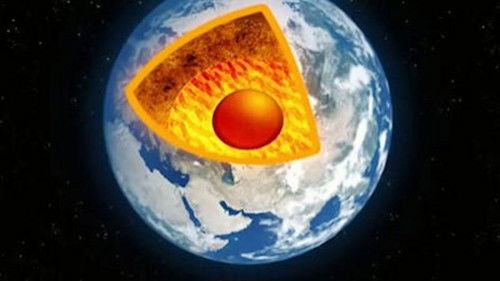
The Universe season 4 episode 10 still

The Universe: Season 4 Episode 10 — Pulsars & Quasars

Aired October 27, 2009·45 min

They sort of sound like the same phenomenon, but Pulsars and Quasars are very different. Pulsars are tiny--only a few miles across--but they spin as fast as a kitchen blender and sweep the sky with beacons of radiation that make them appear to flash on and off. They have unbelievably strong magnetic fields, are more accurate than atomic clocks...and they can even tell aliens just where to find the Earth! Quasars are at the other end of the spectrum. Quasars are huge cores of galaxies with black holes that are called "monsters" and which spit lobes of radiating gas called "DRAGNs." Quasars are so far away, we see them as they were only in the distant past--meaning they existed only in the early universe, when they may have played a major role in the creation of the galaxies themselves.

← Episode 9Episode 11 →All episodes

FAQ about The Universe S4E10

You can watch The Universe season 4 episode 10 "Pulsars & Quasars" online for free on BoredFlix, in HD with no account or registration required.
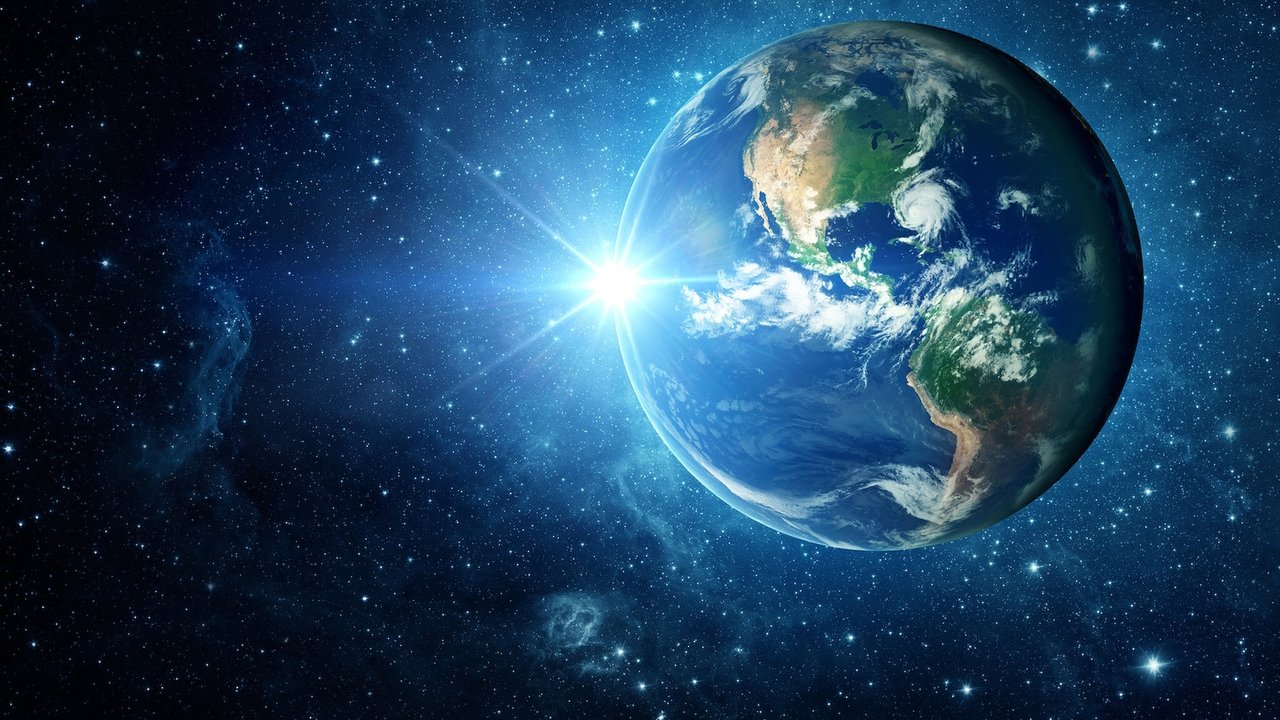

They sort of sound like the same phenomenon, but Pulsars and Quasars are very different. Pulsars are tiny--only a few miles across--but they spin as fast as a kitchen blender and sweep the sky with beacons of radiation that make them appear to flash on and off. They have unbelievably strong magnetic fields, are more accurate than atomic clocks...and they can even tell aliens just where to find the Earth! Quasars are at the other end of the spectrum. Quasars are huge cores of galaxies with black holes that are called "monsters" and which spit lobes of radiating gas called "DRAGNs." Quasars are so far away, we see them as they were only in the distant past--meaning they existed only in the early universe, when they may have played a major role in the creation of the galaxies themselves.

The Universe season 4 episode 10 "Pulsars & Quasars" originally aired on October 27, 2009.

This episode runs for about 45 minutes.

The Universe

The Universe

Documentary

Play S4 E10
2007–2015TV-PG 8.0

From the planets to the stars and out to the edge of the unknown, history and science collide in a wondrous yet deadly adventure through space and time.

Status
Ended
Language
English
First Aired
May 29, 2007
Last Aired
May 23, 2015
Seasons
9
Episodes
88
HistoryH2

E145m

Death Stars

Season 4 opens with an exploration of dying stars, the process where stars become supernovas, and, occasionally, become the biggest blast in the universe as a gamma ray burst (GRB). One death star, named WR104, lurks 8,000 light-years from Earth and some believe its GRB arrow is aimed directly at us. A death star galaxy named 3C321 is a frightening vision of what could one day befall the Milky Way galaxy: a companion galaxy's black hole being hammered with a constant blast of high-energy particles, wreaking havoc with its celestial bodies. Nearby, Death Stars Eta Carinae and Betelgeuse burn through their fuel supplies as they hurtle toward extinction...which just may be too close for comfort.

E245m

The Day the Moon Was Gone

Without the moon, Earth would be a very different and desolate place today--four hours of sunlight with pitch-black nights, steady 100-mph winds spawning giant hurricanes that last for months, and virtually no complex life forms, much less humans. Safe to say, we probably owe our very existence to the moon. But what if it suddenly disappeared?

E345m

It Fell From Space

Every year, thousands of objects both natural and manmade plummet through our atmosphere and crash into the Earth. These menacing messengers from the sky provide scientists with amazing insights into the natural, and not so natural, phenomena of the cosmos. From space rocks crashing through homes to cosmic boulders triggering mass extinctions to rocket parts landing on front lawns, explore objects that fall from the heavens, such as asteroids, comets, meteor showers and space debris.

E445m

Biggest Blasts

An examination of the most powerful explosions and blasts in the universe. Includes a look at the Mexico's Yucatán peninsula and the impact which caused the Chicxulub crater. Also a look at gamma rays and Big Bang Theory.

E545m

The Hunt for Ringed Planets

They are breathtaking, lethal and a constant source of surprise. The stunning rings of Saturn have mesmerized countless scientists over the centuries. With particles the size of a house shooting at 53,000 miles per hour around the planet, any spacecraft passing through would meet an instant and catastrophic end. Inside the rings is like a NASCAR race - with bumping, jostling and frequent collisions that can cause a massive spin-out. Lesser known are the other planets that have rings - Uranus, Jupiter, Neptune, possibly Pluto and Mars. Even Earth has a ring. Comprised of some 200 satellites in a geosynchronous orbit, it is the only known man-made ring in the universe. But the most remarkable thing about rings is that they contain the story of the birth of our solar system, and entire distant galaxies. Rings are more than a wonder of the universe - they reveal the secrets of our own origins.

E645m

10 Ways to Destroy the Earth

Experts cook up ways you could destroy the Earth, including swallowing it with a black hole, blowing it up with anti-matter, hurling it into the Sun, and switching off gravity.

E745m

The Search for Cosmic Clusters

They are the one-stop-shopping places for learning all about the nature and variety of stars in the Universe. They're unique, because in clusters, all the stars were born at about the same time, from the same material and all are at the same approximate distance from Earth. This means we can be sure that any differences among them are due to their true natures and not distorted by different distances from Earth and other factors.

E845m

Space Wars

Outer space is already an essential part of America's ability to fight wars. Our military depends on satellites for many things, such as communications, reconnaissance and targeting information. But so far, no country has put weapons into space, although the U.S. and China have both shown they can shoot down satellites with ground-based missiles. If weapons do become a part of space, how will they work, how effective will they be, and what type of damage could they do? From ground-based lasers to telephone-pole sized rods hurtling from space at two miles per second to the far out weapons of the distant future, it's time to "lock and load" for Space Wars.

E945m

Liquid Universe

On alien planets, they rain from the sky as scalding iron. On distant moons, even at hundreds of degrees below zero, they slosh around in pristine lakes of methane. They can cover entire planets in miles-deep oceans of electrified hydrogen metal. Or erupt on alien worlds through miles-high geysers. They churn in the interiors of dead stars and even our own planet. They're so rare in the universe, they almost don't exist, but these are the magical liquids of our Liquid Universe.

E1045m

Pulsars & Quasars

They sort of sound like the same phenomenon, but Pulsars and Quasars are very different. Pulsars are tiny--only a few miles across--but they spin as fast as a kitchen blender and sweep the sky with beacons of radiation that make them appear to flash on and off. They have unbelievably strong magnetic fields, are more accurate than atomic clocks...and they can even tell aliens just where to find the Earth! Quasars are at the other end of the spectrum. Quasars are huge cores of galaxies with black holes that are called "monsters" and which spit lobes of radiating gas called "DRAGNs." Quasars are so far away, we see them as they were only in the distant past--meaning they existed only in the early universe, when they may have played a major role in the creation of the galaxies themselves.

E1145m

Science Fiction, Science Fact

Warp speed, transporters, wormholes and lasers--they are all staples of science fiction books, movies, and TV shows. But the fantastic world of tomorrow is quickly becoming the futuristic world of today. While you may not be "beaming" to your next appointment any time soon, researchers are preparing for the first tests of a present-day "transporter." And while scientists have long mocked Hollywood's visions of warp speed and faster-than-light travel as prohibited by Einstein's laws, a new generation of physicists continues to rewrite the fundamental rules of the universe. Is there a way around the cosmic speed limit? Maybe... as long as you're prepared to survive a journey through the ultra-high energies of one of the most violent places in the cosmos--the heart of a twisting, swirling vortex that leads either to strange, new worlds... or certain death.

E1245m

Extreme Energy

Ours is a universe of energy, from powerful jets ejected from black holes to the raw nuclear fury of our Sun. But, the total amount of energy in the universe maintains perfect equilibrium--no more can be added or taken away. Because of this, there are enormous amounts of energy being transferred...electric, thermal, kinetic and magnetic energy are just a few that keep our universe balanced--and create awesome cosmic events and stellar displays.

Cast

David Ackroyd

David Ackroyd

Erik Thompson

Erik Thompson

You Might Also Like

Horizon

Horizon

1964 7.5

Cosmos: A Personal Voyage

Cosmos: A Personal Voyage

1980 8.7

Solar System

Solar System

2024 8.3

The Planets

The Planets

2019 8.3

Universe

Universe

2021 7.6

The Planets

The Planets

1999 8.1

The World According to Jeff Goldblum

The World According to Jeff Goldblum

2019 6.6

How Do They Do It?

How Do They Do It?

2006 7.5

Cosmos

Cosmos

2014 8.5

Mysteries at the Museum

Mysteries at the Museum

2010 8.8

Lost Treasures of Egypt

Lost Treasures of Egypt

2019 7.5

How the Universe Works

How the Universe Works

2010 8.3

America's Book of Secrets

America's Book of Secrets

2012 7.2

Into the Universe with Stephen Hawking

Into the Universe with Stephen Hawking

2010 7.8

American Masters

American Masters

1986 7.0

American Experience

American Experience

1988 6.5

Ancient Aliens

Ancient Aliens

2010 7.1

Down to Earth with Zac Efron

Down to Earth with Zac Efron

2020 7.7

Drain the Oceans

Drain the Oceans

2018 7.1

History's Greatest Mysteries

History's Greatest Mysteries

2020 7.7

FAQ about The Universe

You can watch The Universe online for free on BoredFlix. We offer high-quality streaming in HD with no registration required, on desktop, mobile and TV.

From the planets to the stars and out to the edge of the unknown, history and science collide in a wondrous yet deadly adventure through space and time.

The Universe has 9 seasons and 88 episodes available to stream on BoredFlix.

The Universe has finished airing — its status is "Ended". All available episodes can be streamed on BoredFlix.

The Universe first aired in 2007. You can stream it free on BoredFlix.

The Universe stars David Ackroyd and Erik Thompson.

The Universe holds an average viewer rating of 8.0/10 from 188 votes on TMDB. You can watch it free on BoredFlix and decide for yourself.

No. The Universe can be streamed on BoredFlix without an account, a subscription or a credit card. Creating a free account only adds a watchlist and continue-watching across devices.